Home Books Movies Reviews Bio Events Contact Photos Blog

Reviews

Archive for the 'Reviews' Category

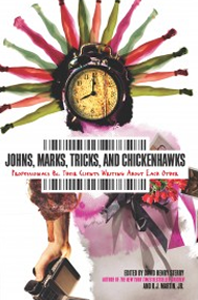
Johns Marks Tricks & Chickenhawks Beautiful Review from Publishers Weekly

pw-logo1johns marks cover cropped


This collection of personal essays by sex workers and their clients vacillates    wildly from hilarious to depressing but never strays from being utterly captivating. Among the more amusing stories are a client with a “sweater fetish”, a woman who paid for her family’s Christmas presents by stepping on a man’s testicles in a pornographic film, and the dominatrix who got fired because she could not remove a client’s tooth. The phone sex operator asked to do cartoon animal voices for a caller is also not to be missed. Candid essays cover everything from the anonymous “captain of industry” with an appreciation for transsexual prostitutes, to the human misery of a pimp who turned out his own girlfriend. Some pieces are more meditative: Fiona Helmsey recalls meeting a kind client at a bachelor party who later died on 9/11, while Dr. Annie Sprinkle discusses her 40 years in the sex industry and her wish for “a more compassionate sex-positive society” in which “prostitutes and johns would be government-subsidized”. Though obviously not for the faint of heart, this book contains some courageous, raw, and intelligent writing that breaks taboos and smashes misconceptions. (Apr.)

http://v2.publishersweekly.com/978-1-59376-507-1

to buy the book: http://amzn.to/Yg0Lp8

book trailer: Who Really Buys & Sells Sex


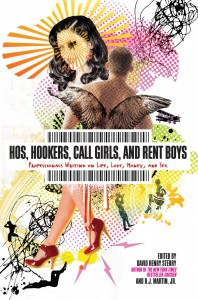
Hos, Hookers, Call Girls and Rent Boys Gets Big Love

Speaking of love, “Hos, Hookers, Call Girls and Rent Boys: Professionals Writing on Life, Money and Sex” is graphic in nature, but full of raw, unfiltered and enlightening tales regarding a side of life not many want to know about; the sex trade. What’s so fascinating and downright addicting is that many of the entries are from individuals one would wrongfully assume to be illiterate, stupid or unworthy to hear from. While proving the stereotype wrong, each contributor delivers his or her side of a lifestyle with poise, passion, nuance and heart.

Real and undeniably shocking, “Hos, Hookers, Call Girls and Rent Boys…” made its debut to encore readers last winter, and I haven’t been able to get it out of my head since. So, it’s one of the most impacting reads yet to strike my world. It widened my eyes, opened my heart and oddly made me want to listen to Madonna’s “Human Nature”—and that’s a good thing.

Top Five Reads:
Tiff ranks her fave favorite page-turners
by: Tiffanie Gabrielse
Encore Online


Bizarre (but nice) New Review of Chicken

from a website that helps treat psoriasis naturally. don’t quite see the connection between itchy skin condition & being a teen rent boy, but so it goes.

http://psoriasisnaturaltreatment.wordpress.com/2010/05/19/review-of-chicken-self-portrait-of-a-young-man-for-rent-paperback/


The Glorious World Cup Gets Love from Library Journal

Library Journal May 15, 2010

Black, Alan & David Henry Sterry. The Glorious World Cup: A Fanatics Guide. NAL Penguin Group (USA). Make 1010. c. 144p. Illus. ISBN 978-0-451-23020-1. pap. $12
a fun yet informative guide to the World Cup, this inexpensive volume provides group match ups, player and country profiles, trivia, and brief histories to cups of the past. Generously illustrated, the book is ideal for reading on your flight to observe the World Cup firsthand-or for browsing between television viewings….a useful guide to casual or serious soccer fan.


Sunday New York Times Book Review: Hos, Hookers, Call Girls and Rent Boys

Sunday New York Times Book Review: Hos, Hookers, Call Girls and Rent BoysSunday New York Times Book Review: Hos, Hookers, Call Girls and Rent Boys

nytbr-meetpaylove-2-of-2.pdfnytbr-meetpaylove-2-of-2.pdf


Hos, Hookers, Rentboys & Callgirls Update

hoshookers1.jpg

Just a quick update on the overwhelming response to our new anthology. And news on upcoming bi (coastal) events. I think they will be packed, so cum early & cum often.  Thanks, David Henry Sterry
EVENTS:
Thursday Sept 3: LA Book Launch: BOOK SOUP 7pm 8818 Sunset Blvd
http://www.laweekly.com/events/david-henry-sterry-and-r-j-martin-jr-s-hos-hookers-call-girls-and-rent-boys-professionals-writing-on-life-love-money-and-sex–682734/
Thursday Sept 3:  Sex Worker Literati: Happy Ending Lounge 8pm 302 Broome St (NYC)
http://www.hoshookerscallgirlsrentboys.com/reading-series/
Wednesday Sept 9: In the Flesh: Hustler Store LA 8pm 8920 Sunset Blvd.
REVIEWS
http://www.nytimes.com/2009/08/23/books/review/Bentleyt.html?_r=2&8bu&emc=bua1
http://therumpus.net/2009/08/hos-hookers-call-girls-and-rent-boys-professionals-writing-on-life-love-money-and-sex/
http://tigerbeatdown.com/?p=448#more-448
http://www.publishersweekly.com/article/CA6667888.html?
http://www.nypress.com/article-20211-the-happy-hook-book.html

NYTBR – 8/23/09

“It’s an eye-opening, occasionally astonishing, brutally honest and frequently funny collection from those who really have lived on the edge in a parallel universe.”

“Their writing is, in most cases, unpolished, unpretentious and riveting — but don’t worry, their tales are also graphic, politically incorrect and mostly unquotable in this newspaper.”

“This collection is a wonderful reminder that good writing is not about knowing words, grammar or Faulkner, but having that rare ability to tell the truth, an ability that education and sophistication often serve to conceal.”

Publishers Weekly – 6/29/09

“Offers insight into seemingly all aspects of the sex trade.”

“Aside from exposing the complex web of relationships among phone sex operators, dancers, massage parlor workers, prostitutes and their customers, the book is heavy with raw emotions ranging from celebratory to shameful, giving armchair sociologists plenty to ponder.”

SF Weekly – 7/25/09

“This kaleidoscopic portrait of sex work in America is all the more striking for its breadth.”

NY Press – 8/11/09

“The prose in this volume is fresh and the tales are both heart-rending and hilarious, sometimes simultaneously.”

“What’s most striking about the volume is how relevant these intimate and detailed chronicles are for any reader, whether they’ve sold their bodies or just their souls. It’s not just about sex.”

Meet, Pay, Love
HOS, HOOKERS, CALL GIRLS, AND RENT BOYS
Professionals Writing on Life, Love, Money, and Sex
Edited by David Henry Sterry and R. J. Martin Jr
333 pp. Soft Skull Press. Paper, $15.95

By TONI BENTLEY
Published: August 20, 2009
Money and sex. Sex and money. Sounds dirty already. Is it the money that makes the sex dirty? Or the sex that makes the money dirty? Or, rather, the puritan strain that says they’re both dirty? How sexy! I mean, how inappropriate! And yet here we are again and again . . . and again. It’s former Gov. Eliot Spitzer of New York spending $80,000 on escorts, the parents (the parents!) of Senator John Ensign of Nevada distributing $96,000 to their son’s mistress and her family, Gov. Mark Sanford of South Carolina using taxpayer dollars to visit his South American “soul mate” and the $4 million rock on Kobe Bryant’s wife’s finger after his adulterous mishap. Money to get the sex, and money to make it go away.
Geoffrey Grandfield
Enlarge This Image

John van Hasselt/Corbis
If you are thinking this dynamic pairing is only for public figures, just contemplate your own divorce, past, present or future. And yet, still, it is taboo to regard sex and money as inextricably interwoven, to openly speak of them together. Why is sex supposed to be free? It never is. Ask anyone. Like Sebastian Horsley, England’s low-rent Oscar Wilde. “The difference between sex for money and sex for free,” he writes, “is that sex for money always costs a lot less.” Money is the elephant in every bedroom, making your parents’ constant presence look positively bourgeois.
But the connection is seeping into the mainstream. Witness Steven Soderbergh’s recent film, “The Girlfriend Experience,” which is about an expensive call girl and stars the real-life porn star Sasha Grey, and the new HBO series “Hung,” about a nice middle-aged dad who becomes a gigolo. The show, however, plays it safe, making him a financially strapped, reluctant gigolo and not, God forbid, a lusty one. Here, ironically, sex for money is more decent than sex for pleasure.
But if you want to know the real price of pleasure, ask the strippers, streetwalkers, Craigslist prostitutes, phone-sex operators, madams, pimps, drug addicts, porn stars and “performance artists” who offer themselves up in “Hos, Hookers, Call Girls, and Rent Boys,” a collection of essays, vignettes, rants and poems, edited by David Henry Sterry (who wrote the very good 2002 memoir “Chicken,” about his life as a young hustler) and R. J. Martin Jr., the director of development for the SAGE Project (Standing Against Global Exploitation) in San Francisco, which offers support of all kinds for sex workers. While good girls require dinner, trips, “commitment” or even an engagement ring for sex, here is a book by those who simply get the cash upfront.
From the unappealing title, you might think this is a truly trashy paperback. Far from it: it’s an eye-opening, occasionally astonishing, brutally honest and frequently funny collection from those who really have lived on the edge in a parallel universe. Their writing is, in most cases, unpolished, unpretentious and riveting — but don’t worry, their tales are also graphic, politically incorrect and mostly unquotable in this newspaper.
There are some well-known names here. Xaviera Hollander informs us that “it’s much harder to be a writer than a hooker,” and the ever-sprightly Annie Sprinkle gives “40 reasons why whores are my ¬heroes” and then asks, “Do you have what it takes to be a whore?” Probably not. (Easier to be a writer, I think.) But the joyous glibness displayed by Hollander and Sprinkle is nowhere to be found in the best of the entries.
“Lele,” a piece by Jodi Sh. Doff, who “grew up in the suburbs as someone else entirely,” recalls Henry Miller’s in-your-face exposition. She tells of a night at Diamond Lil’s on Canal Street, where “Viva’s sitting onstage, legs spread wide.” While her customer is buried and busy, she holds a cigarette in one hand, a drink in the other, and chitchats with a girlfriend about another girlfriend. “Every two minutes or so Viva taps him on the head and he hands her a 20 from a stack of bills he’s holding, never looking up.” We see in this wonderful set piece the whole money/sex connection enacted with raw charm and an immediacy that reaches far beyond this strip club, as the man’s stack of 20s, one by one, becomes hers. Multitasking Viva holds them “folded lengthwise in her cigarette hand.”
Audacia Ray, who now teaches human sexuality at Rutgers University, certainly earned her degree out in the field, having at one point paired up with a woman named Lily as a massage team offering happy endings. “Money got us hot and bothered,” she writes, and one evening, after Lily cashed a disability check from the federal government for $10,000 (she had no bank account, of course), she poured the money — “mostly $20 bills” — onto the bed. They shut off their phones, bathed together, got “very, very high” and then rolled around “naked in the cash. . . . Even now, when I think of the hottest sex we had, I think about currency stuck to her flesh.” Now there’s an image to promote the beneficence of Uncle Sam.
One online dominatrix, Sadie Lune, pooh-poohs all the knowing talk of the “natural power” of a domme making a “proud man” stoop — you know, the lawyer, doctor or judge who wants to clean toilets on a leash. “What we talk about, often off the Internet and out of leather, is the power of money. . . . More often than not the money tops the scene. . . . Money demands slow heavy bondage when all we feel like is smacking a grateful subject around. . . . The biggest trick is really coming to terms with the fact that money is the boss’s boss.” So which is more powerful, money or sex? I forgot.
There’s plenty of useful information in this book for those of you planning a little adultery or prostitution, or even just some old-fashioned phone sex. Lilycat describes the protocol of “Feed Me the Line”: “We couldn’t use any sexually explicit words or phrases till the caller used them first. . . . And strangely enough, getting a very horny man to talk dirty to you isn’t as easy as it seems.” The women were permitted to use medical names for body parts, but “Baby, I would like to do something pleasurable with your penis” was not — surprise, surprise — what the client wanted to hear (though it’s all you’ll get in this review). If the caller refused to talk dirty first, moaning was the fallback, and Lilycat reports the little-known fact that “if you moan for long enough you can become lightheaded and almost pass out” — “so baby, use your dirty, dirty words” and help the lady out.
The most devastating section of the book — its broken heart, its guts on the page — is found in a few horrifying stories that came out of a writing workshop Sterry gave for severely abused young women. For example, Jessica Bertucci writes about her “weekend visit with my dad”: “I begged my mom not to take me but she did anyways. Oh, by the way, my dad raped me when I was 2 years old.” After being blindfolded in a room with her father’s drinking, crack-smoking buddy, she heard her dad “whispering in my ear, ‘Don’t be scared, you’re helping Daddy pay the rent.’ Oh, by the way, I was 9 years old.”
Sterry, as editor, inserts himself considerably more than necessary, introducing many of the writers in such relentlessly lengthy and glowing terms as to patronize them. On the other hand, the actual bios for the contributors make for provocative reading and can leave one feeling like an unadventurous slacker. Berta Avila, “a Chicana from El Segundo Barrio of El Paso,” is now a translator but has been an “exotic dancer, escort service worker, brothel worker, waitress, medical-legal assistant and instructional assistant for elementary-school children.” Zoe Hansen “achieved stability through methadone maintenance and felt it was time to open her own brothel, Sterling Ladies, which was on Park Avenue and 21st Street. It was the first of five brothels she opened during the next three years.” (I’m starting to get a brothel-opening feeling myself.) Carol Queen “got a Ph.D. in sexology so she could impart more realistic detail to her smut.” (Dr. Queen writes about her “oral clairsentience,” but I can’t explain here.) While many, perhaps most, of these writers use pseudonyms, they are everything but anonymous.
Kirk Read tells the magnificent story of Ray, a rich, hairy, middle-aged Texan, who hired Read to be his witness as he methodically enclosed his entire body in numerous “stretchable layers, one upon another.” With the final touches of “gold gloves that reached up past his biceps” and a black spandex hood, “he turned and faced me, holding his hands up into the air like a victorious Mexican wrestler. Humble. Brave.” Very brave, very moving. The scene, in its inherent perversity, has the feel of a crucible, a kind of spandex crucifixion bestowing grace on one who has the courage to go “to the underworld” and find “erotic freedom by any means necessary.” The two men shook hands, the only time they touched, and parted ways, an encounter with more tenderness and dignity than many a marital one.
This collection is a wonderful reminder that good writing is not about knowing words, grammar or Faulkner, but having that rare ability to tell the truth, an ability that education and sophistication often serve to conceal. While we are all, I suppose, in the business of surviving, some really are surviving more notably than others. The collective cry for identity found in this unsentimental compilation will resonate deeply — even, I suspect, with those among us who pretend not to pay for sex.
Toni Bentley danced with New York City Ballet for 10 years and is the author of five books, including “Winter Season: A Dancer’s Journal” and “Sisters of Salome.” She is working on a book about Balanchine’s ballet “Serenade.”


Master of Ceremonies: “dizzying, tender and true story”

“Master of Ceremonies: a True Story of Love, Murder, Roller Skates and
Murder” is the dizzying, tender, and true story of a fledgling actor
whose first break results in a two-year stint as the emcee at
Chippendales, in this work that is resplendent with seedy glamour,
hilarious backstage madness, and unflinching honesty. Sterry
chronicles his adventures as a struggling comic after he is hired as
the host of the popular all-male strip show Chippendales in the early
Eighties. He more than delivers on the promise of his title, and
readers looking for sex, drugs, and New York-style debauchery will
find it in spades. There is a tabloid-level sleaziness inherent in the
material, which Sterry utilizes for maximum entertainment value. He
avoids providing direct sociological commentary on the sexual power
dynamics at play in Chippendales, preferring to let events speak for
themselves. There are two underlying love stories, one between Sterry
and a coworker, and one between Sterry and his craft; both enrich the
narrative with genuine heart. Sterry possesses an engaging writing
style, and fans of his earlier memoir, Chicken: Self-Portrait of a
Young Man for Rent, will not be disappointed. Recommended for large
public library collections and cultural and media studies
collections.-Katherine Litwin, Chicago Library Journal (07/15/2008)


New York Times

nytimes-big.gif

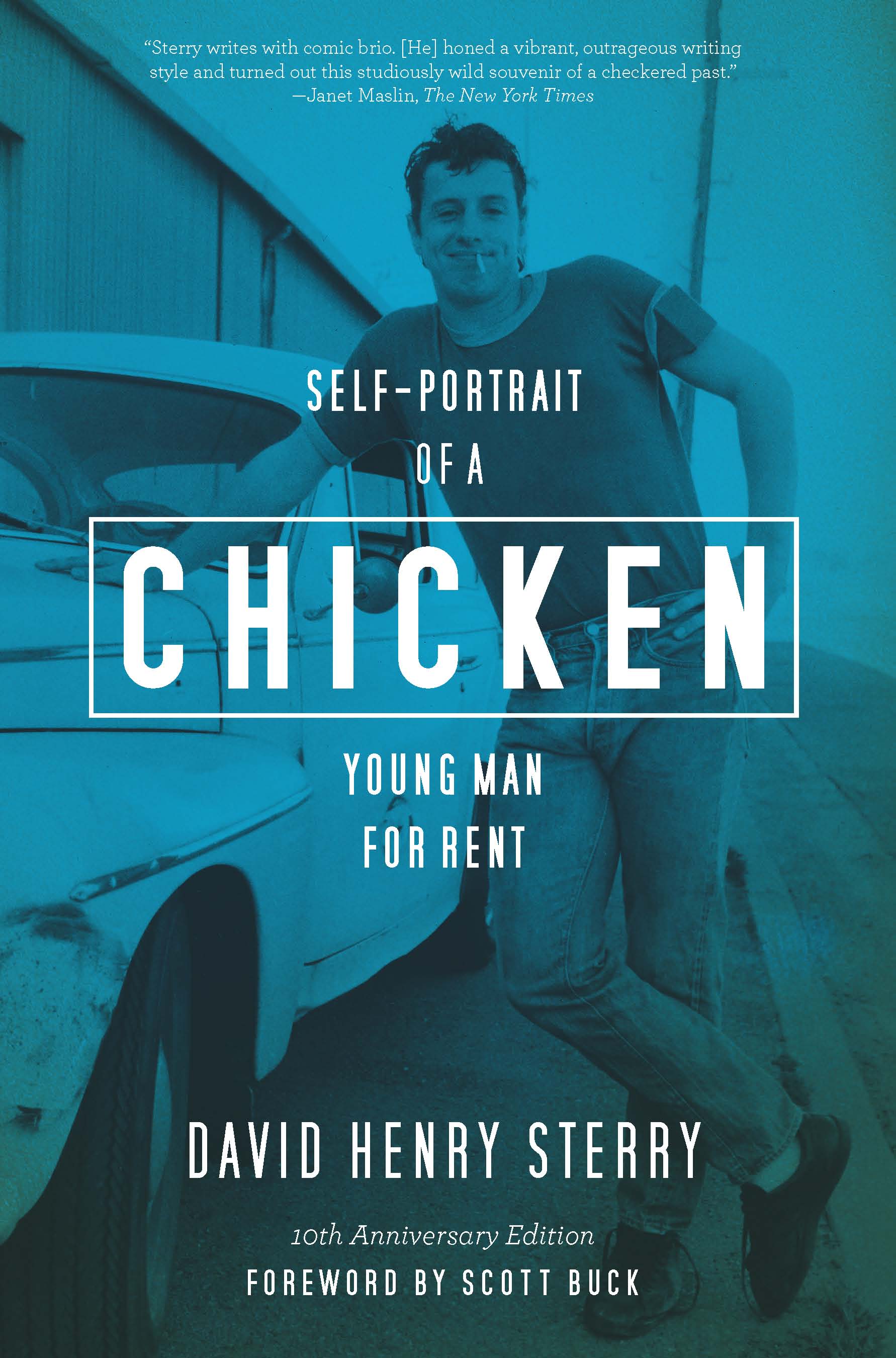
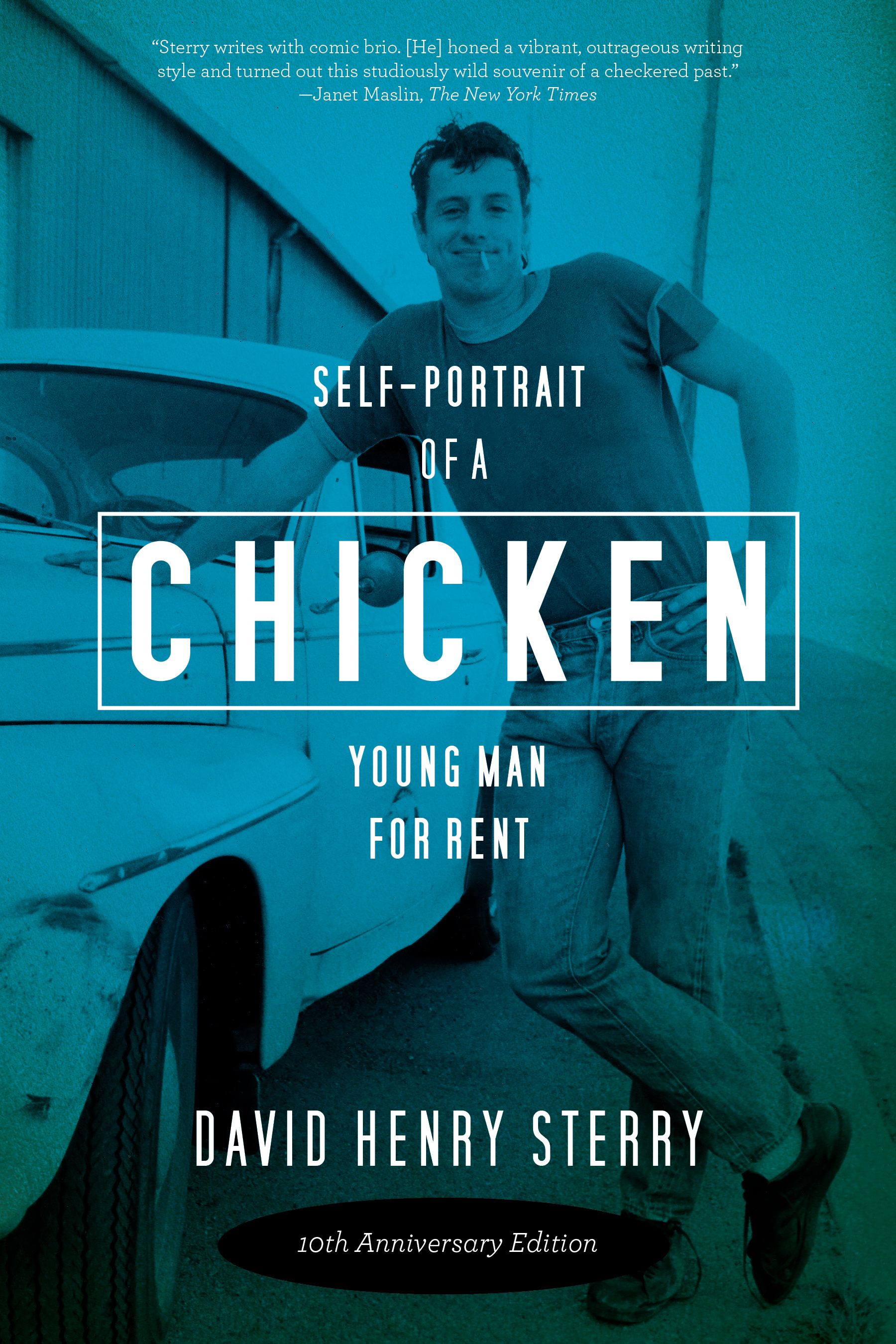
“Sterry writes with comic brio … [he] honed a vibrant outrageous writing style and turned out this studiously wild souvenir of a checkered past.”

– Janet Maslin, The New York Times


Short Reviews

CHICKEN: THE BOOK

Chicken was published by HarperCollins (ReganBooks) in 2002, then Canongate in the UK in 2003, and de Kern in Holland in 2004. It came out in German (Rowohlt, 2005), Spanish (Grupo Planeta, 2005), Croatian (Celeber, 2005). It is coming out in Italian (Adelphi, 2007), and Russia (Red Fish, 2007).

“This is a stunning book. Sterry’s prose fizzes like a firework. Every page crackles… A very easy, exciting book to read – as laconic as Dashiell Hammett, as viscerally hallucinogenic as Hunter S Thompson. Sex, violence, drugs, love, hate, and great writing all within a single wrapper. What more could you possibly ask for? -Maurince Newman, Irish Times

“A beautiful book… a real work of literature… wonderfully written.” – Vanessa Feltz, BBC

“Insightful and funny… great stories… captures Hollywood beautifully…” – Larry Mantle, Air Talk, National Public Radio

“Priceless material.” -Details Magazine

“Humorous and charming… Outrageous and entertaining…” – Michael Williams, BBC 1

“A breezy read, pleasingly free of self-pity… very funny.” -The Observer

“Jawdropping… A carefully crafted piece of work…” -Benedicte Page, Book News, UK

“A 1-night read. Should be mandatory reading for parents and kids.” -Bert Lee, Talk of the Town

“Few rites-of-passage tales can match up to this one.” -The Weekend Scotsman

“In een eigenzinnige stijl en met een superb.” -Dutch Journal

“Hilarious.” -The Guardian (London)

“Alternately sexy and terrifying, hysterical and weird, David Henry Sterry’s Chicken is a hot walk on the wild side of Hollywood’s fleshy underbelly. With lush prose and a flawless ear for the rhythms of the street, Sterry lays out a life lived on the edge in a coming-of-age classic that’s colorful, riveting, and strangely beautiful. David Henry Sterry is the real thing.” –Jerry Stahl, author of Permanent Midnight

“The overall effect is jarringly surreal, like an X-rated Boogie Nights narrated by a teenage Alice in Wonderland. Sterry’s anecdotes… expose Hollywood at its seamiest, a desperate city of smut and glitz. I read the book from cover to cover in one night, finally arriving at the black and white photo of the softly smiling former chicken turned memoirist.” -Places Magazine

“Farcical… sad… perceptive… Reality porn for the sophisticated reader.” – The Sunday Herald

“Compulsively readable, visceral, and very funny. The author, a winningly honest companion, has taken us right into his head, moment-by-moment: rarely has the mentality of sex been so scrupulously observed and reproduced on paper. Granted, he had some amazingly bizarre experiences to draw upon; but as V. S. Pritchett observed, in memoirs you get no pints for living, the art is all that counts-and David Henry Sterry clearly possesses the storyteller’s art.” – Phillip Lopate, author of Portrait of My Body – Phillip Lopate, author of Portrait of My Body

“Snappy and acutely observational writing… It’s a book filled with wit, some moments of slapstick, and of some severe poignancy… a flair for descriptive language… The human ability to be kind ultimately reveals itself, in a book which is dark, yet always upbeat and irreverent. A really good, and enlightening, read.” – Ian Beetlestone, Leeds Guide

“Brutally illuminating and remarkably compassionate… a walk on the wild side which is alternatively exhilirating and horrifying, outrageous and tragic… Essential reading.” – Big Issue

“Visceral, frank and compulsive reading.’ –City Life, Manchester

“Sparkling prose… a triumph of the will.” -Buzz Magazine

“Pick of the Week.” -Independent

“Generous and refreshing… colorful and entertaining.” -The List, Edinburgh

“Unflinching and perceptive …often very funny.” -Independent on Sunday

“Farcical… sad… perceptive… A rollercoaster… Reality porn for the sophisticated reader.”-Vicky Allan, The Sunday Herald

“Buy it, read it.” -Ladsmag

“Fresh and fascinating… highly amusing, deeply shocking, … and rather sweet.” -What’s On

“Impossible to put down, even, no, especially when, the sky is falling…Vulnerable, tough, innocent and wise… A fast-paced jazzy writing style… a great read.” -Hallmemoirs

“Full of truth, horror, and riotous humor.” -The Latest Books

“His memoir is a super-readable roller coaster — the story of a young man who sees more of the sexual world in one year than most people ever do.” – Dr. Carol Queen, Spectator Magazine

“Terrifically readable… Sterry’s an adventurer who happens to feel and think deeply. He’s written a thoroughly absorbing story sensitively and with great compassion… A page-turner… This is a strange story told easily and well.” – Eileen Berdon, Erotica.com

“An intriguing and compelling read… Lively, honest prose which cleverly combines the past with the present.” -Carol Anne Davis, Tangled Web UK

“Love to see this book turned into a movie, Julianne Moore might like to play Sterry’s mum…” – by Iain Sharp The Sunday Star-Times, Auckland, New Zealand).

“Chicken expands our understanding of who does sex work and what it involves; of how family dislocation, dysfunction and desertion affect children and adolescents; and of the complex interplay between social norms, sexual practices, “deviant” behavior, and identity. Academics might use Chicken profitably to help students explore non-fiction and memoir writing, or substantively in courses on gender, sexuality, adolescence, deviance, the sexual revolution, the 1970s, southern California, and related topics. As a floodlit slice of life or an object lesson about attempts to counterbalance (dare I say “straddle”?) propriety and impropriety, Chicken is highly recommended. The writing style in Chicken is brash and engaging. Reminiscent of “gonzo journalism” and Lewis Carroll, Sterry’s style includes vivid descriptions, trenchant metaphors, creative compound words, and a taste for alliteration. Yet the book is more than just flashy, over-the-top recounting of colorful anecdotes. Rather, Sterry’s writing style serves his substance well, clearly evoking the milieu of 1970s sexual-revolution-era Hollywood. At the same time, the book is visceral and brutally honest about Sterry’s emotional and physical ordeals during his year as a sex worker. He expresses both sympathy and anger for his clients; in regard to his own behavior, he is subtly introspective, smoothly moving between an account of his feelings at the time and a retrospective evaluation of his actions and motives. While his account does not appear to temper the meanness, sadness or vapidity of many of his customers, he does not shrink from reporting his own failings, either. For example, his recounting of his displaced rage on the basketball court is unflinching and heartbreaking.” Dr. Ann Lucas –Sexuality & Culture, an Interdisciplinary Quarterly
CHICKEN: THE SHOW

#1 Play in Great Britain. -The Independent

“Poignant…a rare pleasure… moving and original… revealingly honest… Sterry is a sharp comic, using his limber body and versatile voice to create memorably portraits of the hungry, lonely, wealthy women who employ his services…Sterry needs no other prop than a wooden bench to get full mileage out of the ludicrousness of sex… But what gives it depth is the hard, sad reality beneath its Rabelaisian humor… Richly entertaining and thought-provoking… Speaks cleverly and provocatively to anyone who’s ever been or had a child.”
—Robert Hurwitt, Head Theater Critic to The San Francisco Chronicle

“Full of energy… fast, provacative, and highly engaging… Simply unmissable…” – The Hearld

“Irresistible… very enjoyable… radiates honesty… funny, physical, and fast…” -The Scotsman

“What a rare pleasure it is to see a writer perform his own work… dream-like profundity…Sterry’s portrayal of his 17-year-old self is immediately honest and believable… juxtaposed with his masterful control of poetic dialogue balances the show.” — SF Examiner

“Sterry summons up in glorious technicolour an amazing array of characters… Extraordinary… engrossing and touching… a great story… It’s a must!” —Daily Mail

“Graced with insight and empathy—Sterry finds a literary rhythm as fluid and alluring as the strut of his ‘nuthugging elephantbells’… a sense of humor as bright and ridiculous as a ‘blood-engorged wangdangdoodle- hammer’.” —S F Weekly

“Disturbing, heartrending, and so funny it makes you choke… intoxicating energy and magnetic storytelling charisma… the poignancy and honesty hits you hard.” – Brighton Argus

“A tour-de force.”—SF Bay Times
“Sextacular.” – Beth Lisick, SF Gate
“Frank, funny and surreal.” –The Stage
“Pick of the week… Hysterical.” – The Guardian
“Hard-hitting and universal.” -Time Out San Francisco
“Sterry is a man you should know” -Year-End Best Of SF Weekly

“Sterry tells a sad and harrowing story with humor, energy, and a sharp eye for the sort of characters an ‘industrial sex technician’ might meet in the weird aftermath of the ‘60s.” —Michael Scott Moore, The San Francisco Weekly

“Hugely compelling to watch… real skill… The story is told in deft snippets… the language is poetic, and a 1970’s soundtrack gets the audience in the mood… [a] triumphant story… it’s clear that this is a comedy hiding in a tragedy.” -The Independent

“Sterry writes with comic brio… [he] honed a vibrant outrageous writing style and turned out this studiously wild souvenir of a checkered past.” – Janet Maslin, New York Times


Ann Lucas, San Jose State University

The Chicken Clucks Defiant: A book review of Chicken: Self-Portrait of a Young Man for Rent, by David Henry Sterry (New York: HarperCollins, 2002, 247 pp.)

Ann Lucas
San José State University
San José, California
alucas@email.sjsu.edu

As the subtitle of David Henry Sterry’s Chicken suggests, this book is a memoir of the author’s year working as a teenaged prostitute. At the age of 17, having arrived in Los Angeles to start college, Sterry found himself homeless when planned living arrangements fell through. In short order he was lured into a stranger’s home, raped, and robbed of his last twenty-seven dollars. Escaping, Sterry was offered refuge and a job by the manager of a fried chicken restaurant. In what Sterry now recognizes as a great cosmic joke, his boss also happened to be the purveyor of human chickens (i.e., a pimp); leaving fast-food wages behind, Sterry soon was charging $100 per hour for his services. His encounters with the colorful, seedy, bizarre, enterprising, desperate, and pathetic who lived on both sides of respectability in 1970s Southern California provide a framework and narrative thread for Sterry’s recounting of how his year in sex work affected him materially, emotionally and interpersonally. Throughout the book, Sterry’s accounts of assignations with clients and dilemmas in balancing his identities as rent boy and college student are interspersed with his childhood memories of growing up in an English immigrant family which is slowly falling apart. These episodes from his childhood and adolescence help provide a context, if not necessarily a cause, for his outlook on life and his foray into sex work. The book concludes with his decision to leave the sex industry.
The writing style in Chicken is brash and engaging. Reminiscent of “gonzo journalism” and Lewis Carroll, Sterry’s style includes vivid descriptions (“Frannie, perched like an anorexic bird in the plumage of her couch”) (p. 33), trenchant metaphors (Sisyphus and leaky buckets), creative compound words (“nuthugging elephantbells”) (p. 6 and passim), and a taste for alliteration (“black businessmen bustling by briskly”) (p. 6). Yet the book is more than just flashy, over-the-top recounting of colorful anecdotes. Rather, Sterry’s writing style serves his substance well, clearly evoking the milieu of 1970s sexual-revolution-era Hollywood and giving the reader a definite sense of his personal style and character as a lost but resourceful late-adolescent. At the same time, the book is visceral and brutally honest about Sterry’s emotional and physical ordeals during his year as a sex worker. He expresses both sympathy and anger for his clients; in regard to his own behavior, he is subtly introspective, smoothly moving between an account of his feelings at the time and a retrospective evaluation of his actions and motives. While his account does not appear to temper the meanness, sadness or vapidity of many of his customers, he does not shrink from reporting his own failings, either. For example, his recounting of his displaced rage on the basketball court is unflinching and heartbreaking (pp. 181-185).
Sterry’s book reflects the truism that experiences shape perspectives. His views of his year as a “chicken” reflect, among other things, his age at the time, the circumstances in which he began the work (voluntarily, but also with some sense of desperation), his feeling of parental rejection and need for love, his recent sexual assault, his interactions with others, as well as the tenor of the times and his location. Thus, despite the fact that many young people are rejected by their parents, find themselves on the streets, and engage in prostitution, this Chicken is not an “everyman chicken,” but rather an account of a unique person in a unique situation.
That said, Chicken can also be placed in a larger literary and socio-cultural context. Sterry’s memoir is important for many reasons, one of which is that it is the first account of a young male prostitute working primarily with a female clientele. We have several examples of memoirs and lightly fictionalized first-person accounts by female sex workers (see, e.g., Almodovar 1993; French 1988; Quan 2001; Hollander 2002) and by male hustlers serving a male clientele (see, e.g., Whitaker 1999; Lawrence 1999). Sterry expands the genre of work created by these “sex worker literati” (Kuczynski 2001); in offering his unique story, he also enables those familiar with the genre to speculate about commonalities and differences among prostitutes (and among clients) as we compare his story to others. For example, like countless others, Sterry refers to his time in prostitution as “the life,” (Sterry, p. 125) indicating a recognition that prostitution in the U.S. is no simple vocation, but rather has larger implications for its practitioners and a broader significance in society. Indeed, Sterry’s book helps demonstrate why “the life” is often used as a synonym for prostitution: illegal and stigmatized, for most prostitution is no mere way to pay the rent. Instead it may involve false names and cover stories; the threat or actuality of violence; uncertainty due to the risk of arrest, eviction, expulsion, loss of custody, deportation and the like; emotional distance from loved ones; and inner turmoil, just to name a few. Whether a prostitute embraces or regrets his/her work, the fact of stigma and criminality often do lead prostitutes into “the life” of prostitution because of the things they must do to conceal their activities from others and the opportunities they forego because of the risk of disclosure.
In contrast, unlike many other “sex positive” authors of prostitution memoirs, Sterry reports that he had only one client who was not hateful (p. 125). Among myriad possibilities, Sterry’s claim may suggest that women as commercial sex consumers tend not to be appreciative of the services they receive; that the kind of women, particularly in the 1970s, who could conceive of, afford, and follow through on paying for sex are a unique sample of mostly troubled, superficial, nihilistic or misanthropic individuals; that teenaged sex providers are particularly taken for granted; or that something specific to Sterry–his own misgivings about his work, the way in which his manager procured customers, etc.–influenced Sterry’s interactions with and perceptions of his clients. While the reader can do little more than speculate about this matter, this kind of contrast nonetheless demonstrates the usefulness of Sterry’s book in helping those among us who research, observe, theorize about, or participate in the sex industry to (re)consider how specific or generalizable our own findings, conclusions, beliefs and experiences may be.
The complex relation between the specific and the general is implicated in other ways by Sterry’s memoir. For example, some readers may feel that Sterry wrongly sentimentalizes non-commercial consensual intercourse, drawing too stark a dichotomy between the nastiness of paid sex and the delights of unpaid sex. Remembering having sex with his college girlfriend for the first time, Sterry writes: “This is so different from working sex. That’s dank dark distant and mechanical, and I have to pump myself up into a loverstudguy to do it.” (p. 85) As people from all spectra of human experience have pointed out, including this reviewer (Lucas, in press), commercial sex is not always or necessarily impersonal and alienating, nor does non-commercial sex always or necessarily promote sharing, bonding and interpersonal connection. Yet Sterry should not be faulted for his viewpoint here, because, with few exceptions, his book consistently makes clear that this story is his alone; he never claims to speak for all rent-boys, rape victims, or homeless teens. Moreover, many teenagers see the world, including the world of sex, as black and white. Despite Sterry’s greater exposure than most adolescents to the extremes of sexual practice, given his conflicted emotions about his behavior, at this time he probably also viewed paid and unpaid sex strictly as a study in contrasts. Thus, rather than being faulted for portraying this view in his memoir, Sterry merits praise for recreating this duality so accurately.
However, when he ventures beyond his specific story, Sterry is on unstable ground. Sterry reports that “[o]ver ninety percent of sex workers have been sexually abused” (p. 82). This figure is wholly unsubstantiated. Studies reporting such a high rate of abuse have consistently proved invalid due to poor design, questionable administration, vague or over-general definitions of abuse, and inadequate sampling. Where even roughly accurate, such figures describe only specific and extremely limited groups of sex workers. For the population as a whole, it is impossible to know how many sex workers have been abused–even with precise definitions of abuse–because it is impossible to conduct random sampling or to establish that a sample is indeed representative of the larger population. Sex workers in general, and prostitutes especially, do not consistently admit involvement in the sex industry. As such, the size, spread, and basic demographic characteristics of this population are impossible to specify, including its rates of abuse. Moreover, it is probable that sex workers who are abuse survivors are more likely to come to researchers’ attention through contacts with law enforcement, safe sex outreach workers, drug counselors, and others, because their history of abuse may make them less able to conceal their activities, more at risk for problem behaviors, and more open to outreach workers offering help. In other words, researchers often start with a skewed sample. Finally, to the extent any generalizations are possible, they are most reliable for female prostitutes. Male sex workers are an especially poorly understood group, in part because they are rarely studied except in connection with HIV and AIDS. Absent more information about male prostitutes as a group, one cannot assume that findings applicable to women also describe their male counterparts.
However, this is a minor flaw in an otherwise outstanding work. In terms of its larger lessons, Sterry’s memoir reinforces what other sex workers and academics have said in their own ways about the many problems of stigma and the need for society to recognize prostitution as a legitimate and valuable profession when freely chosen. In recounting his yin-yang experiences and emotions regarding sex work, Sterry shows us what a minefield the terrain of prostitution can be for its practitioners. Like other prostitutes, both male and female, Sterry’s self-esteem was both enhanced by (or through) prostitution, and also, sometimes simultaneously, diminished–especially when his clients made clear their lack of regard for him and his ilk. Sterry’s memoir suggests that when prostitution is not fully chosen or continued, and when it is practiced by those who are vulnerable, immature, living in precarious conditions or otherwise at risk, it is a practice that may be highly fraught with tension and uncertainty. That is, a person who is both young and ambivalent about his or her work as a prostitute is likely to be particularly susceptible to societal condemnation, stigma, and self-doubt. These forces, in turn, can make it more difficult for such a person to navigate the terrain of prostitution successfully, find or create a support network, make decisions to promote well-being, negotiate successfully with clients, learn which clients (s)he prefers or how to select them, and the like.
Again, this is not to fault Sterry or to diminish his successes and ingenuity in chickenhood. Nor is it to suggest that we can reach dispositive conclusions based on one set of experiences. Rather, it is to insist that we not discount this set of experiences as simply a compelling coming-of-age story, another example of triumph over adversity, or a Day-Glo® portrait of seamy Hollywood excess. While it may be these things, Chicken is more. It expands our understanding of who does sex work and what it involves; of how family dislocation, dysfunction and desertion affect children and adolescents; and of the complex interplay between social norms, sexual practices, “deviant” behavior, and identity. Academics might use Chicken profitably to help students explore non-fiction and memoir writing, or substantively in courses on gender, sexuality, adolescence, deviance, the sexual revolution, the 1970s, southern California, and related topics. As a floodlit slice of life or an object lesson about attempts to counterbalance (dare I say “straddle”?) propriety and impropriety, Chicken is highly recommended.

References
Almodovar, Norma Jean. 1993. Cop to Call Girl: Why I Left the LAPD to Make an Honest Living as a Beverly Hills Prostitute. New York: Simon & Schuster.

French, Dolores, with Linda Lee. 1988. Working: My Life as a Prostitute. New York: E.P. Dutton.

Hollander, Xaviera, with Robin Moore & Yvonne Dunleavy. 2002 [1972]. The Happy Hooker: My Own Story. New York: Regan Books.

Kuczynski, Alex. 2001, November 4. The Sex-Worker Literati. New York Times, sec. 9, p. 1. Retrieved May 28, 2003 from LexisNexis Academic database.

Lawrence, Aaron. 1999. Suburban Hustler: Stories of a Hi-Tech Callboy. Warren, NJ: Late Night Press.

Lucas, Ann. In press. The Currency of Sex: Prostitution, Law and Commodification. In Martha M. Ertman & Joan C. Williams (Eds.), Commodification Futures: The Role of Markets in Love, Sex, and Other Areas.

Quan, Tracy. 2001. Diary of a Manhattan Call Girl: A Nancy Chan Novel. New York: Crown Publishing.

Whitaker, Rick. 1999. Assuming the Position: A Memoir of Hustling. New York: Four Walls Eight Windows.

 

Erotica.com

“Terrifically readable… Sterry’s an adventurer who happens to feel and think deeply. He’s written a thoroughly absorbing story sensitively and with great compassion… A page-turner… This is a strange story told easily and well.”

– Eileen Berdon, Erotica.com


Audience

Chicken: A 1-Ho Show

“The show was great to see! David is an awesome performer/actor/writer. Pure poetry in motion. Nice to finally get the hetero male perspective of sex work.”
 – Annie Sprinkles.

***

“The show was absolute amazing and to let me know if he’s showing it again as I’d love to invite more friends!”

***

“I loved the show. What struck me most was the love you had for your life and how it came through in the show (healing is so wonderful ain’t it? I loved the simplicity in set and the choice to use only the bench as a prop/set piece … the choreography/direction was marvelous… your writing is wonderfully poetic, and your love for words comes shining through.”

***

“I wish I knew enough superlative adjectives to use in praise of Chicken. All I can say is that it was wonderful. He was mesmerizing and pulled me into the life of a naive Texas boy thrown out on the street and into the arms of the wolves in Hollywood. He is truly a gifted actor and the way he not just described in words but make real through his body language and movement the people in his world to life was awsome – man or woman they were equally real to me. I felt not only his truths but theirs. Thank you David for letting me (and the rest of the world) so truthfully into your experiences.

***

“The performance last night was nothing short of spectacular. Your writing is so wonderfully poetic, funny, and sad. I love works that can make me laugh and cry. Yours did the trick. And I loved the physicality of the show. You really brought the writing to life–so animated, very rich 3D imagery and characterizations. I’m certainly going to tell everyone I know to see the show.”

***

“L-O-V-E-D the show. Honest and truly. We talked about it the whole walk home.”

***

“You are not just a great actor. You are a shape shifter. I saw you look different for each character. I SAW Sunny, his ‘fro, his caftan, SAW Kristi, I SAW the teenie bopper runaway. I saw your face go silly-putty-sideways, and your Dad come out….You could wipe the floor with Robin Williams in a goofy character face-off. I LOVED Sunny. Some of my best friends have been 70s black hippie faggots. Vocally, just for the pure Barry White honey of the voice, I loved Sexy. You have transmitted your pain into art, and now the artistic rendering of your tormentor brings pleasure. That’s alchemy. Shamanism, magic, healing. Of course, laughter is the strongest medicine… You’re also a word candy daddy, West Coast writers’ school: Tom Robbins, Rob Brezhney, David Sterry dishing out chewy delicious mouthfuls of succulent syllables. Basically, you rock. Love the opening stroll down H’wood blvd, with those split second portraits. Dynamite, dude.”

***


Time Out San Francisco

“A funny, poignant story that examines issues both hard-hitting and universal.”

– Time Out San Francisco


The San Francisco Weekly

sfweekly.jpg“Graced with insight and empathy—for his own rage, for his family, and for the wealthy female clients whom he serves—Sterry finds a literary rhythm as fluid and alluring as the strut of his ‘nuthugging elephantbells. Combine this with a sense of humor as bright and ridiculous as a ‘blood-engorged wangdangdoodle-hammer, and you have material that is ideal for stage and screen.”

– Silke Tudor, The San Francisco Weekly (House of Tudor column)


The San Francisco Weekly

sfweekly.jpg“Sterry tells a sad and harrowing story with humor, energy, and a sharp eye for the sort of characters an ‘industrial sex technician’ might meet in the weird aftermath of the ‘60s.”

– Michael Scott Moore, The San Francisco Weekly (Theater section)


SF Gate

sfgate.jpg

“Sextacular… Poignant… Effortlessly whip[s] himself into pimps, hos, housewives, hippies, swingers, nuns, and nice girls…”

– Beth Lisick, San Francisco Gate


The San Francisco Examiner

sfexaminer.jpg 

“Experiencing [Sterry’s] natural ear for rhythm and timing, we are reminded of what a rare pleasure it is to see a writer perform his own work. Much like beat poetry, Sterry’s carefully crafted, simple language infuses mundane situations with dream-like profundity…Sterry’s portrayal of his 17-year-old self is immediately honest and believable. In fact, the character’s insecure teenage naiveté juxtaposed with Sterry’s masterful control of poetic dialogue is what balances the show…Sterry remarkably creates and portrays his characters.”

– Emily Klein, The San Francisco Examiner


The San Francisco Chronicle

sfchron.gif

“Poignant, humorous…a rare pleasure…funny, moving and original…an exceptional, comically idiosyncratic and revealingly honest look at life in difficult times…Much of the material in the 85-minute one-act is hilarious…Sterry is a sharp comic, using his limber body and versatile voice to create memorably funny portraits of the hungry, lonely, wealthy women who employ his services…Sterry needs no other prop than a wooden bench to get full comic mileage out of the ludicrousness of sex in some wonderfully varied and graphic guises. But what sets “Chicken” apart and gives it depth is the hard, sad reality beneath its Rabelaisian humor…[“Chicken”] is richly entertaining and thought-provoking… [It] speaks cleverly and provocatively to anyone who’s ever been or had a child.”

– Robert Hurwitt, Head Theater Critic to The San Francisco Chronicle


WZZR

“Written so well… eloquent, amazing… I couldn’t put it down!”

— Josh Cohen, WZZR Radio


Amazon

“Jawdropping… Even as confessional memoirs go, David Sterry’s Chicken stands out from the rest. Alternately farcical, grotesque, brutal and sad… A carefully crafted piece of work… Gives the famous encounter between Dennis Hopper and Isabella Rossellini in “Blue Velvet” a run for its money.”

“Dark wit and considerable compassion… wickedly funny, baroque… sadly, even touchingly human, thanks to Sterry’s matter-of-fact empathy for his disturbed customers… Chicken gets its soul from Sterry’s nuanced portrait of his growing anguish as the work takes him to increasingly scary places, physically and emotionally.”

— Wendy Smith, Amazon


Spectator Magazine

spectator.gif

“His memoir is a super-readable roller coaster — the story of a young man who sees more of the sexual world in one year than most people ever do.”

– Dr. Carol Queen, Spectator Magazine


Readers

Chicken: Self-Portrait of a Young Man for Rent

Incredible… your book, it’s like Kerouac. I loved it so much, I HAD to read it in one sitting. I can’t wait for the next book.

I really can’t express how splendid, wonderful, excellent, clever…. (I’m running out of adjectives) your presentation was yesterday. You held a very tough audience absolutely RIVETED for 3 full hours! the beautiful prose coupled with your performance talent is a killer combination. (I kept wanting to stop your reading in order to point out specific narrative techniques you used–how *skillfully* the "technical" aspects of writing contributed to the power of the book. I guess I’ll have to wait until the book is out, and assign it as a classroom text in order to deconstruct it on that level. Alice La Plant – SF State University Professor

***

I tore through your book in a matter of hours: read it while walking to work, on the BART, in line at the store. Loved it. – SF

***

I am really looking forward to reading your next book – you are an incredibly gifted writer. The book broke my heart, turned me on, and gave me the vicarious thrill of walking in a man’s shoes (yours) for a day. Thank you for sharing your experiences, and yourself, with me and the world. As with all great books, the last page left me screaming No Wait- I Still Don’t Know What Happened – Juline Koken – NYC

***

I just finished the book. First, my gratitude for the testimony, for positing the story in the world. Then for the cockygiddyjoygift of your style, grace, clarity, humour and generosity. all this seeping and fuming between bouts of mouth-drying horror and lumpy-throat sexiness. Thanks – Dr. Leon Johnson, University of Oregon

***

Very powerful–sad, funny, accomplished… Susan Boloton, Workman Press

***

I was skeptical about reading this memoir because the sex industry is not a subject that I’m especially drawn to. My friend read and loved this book and strongly suggested that I read it. I took her advice and once I began to read I was completely unable to put Chicken down. The writing style of this book flowed so smoothly and was crafted so skillfully that I felt that I was watching the story happen rather than reading it off of a page. This book was fascinating and I commend David Sterry for his honesty and courage. – San Francisco

***

Just finished you book and enjoyed it very much. Thought I’d reach out and let you know that you touched at least this reader. You have an excellent and articulate voice – looking forward to your next work. Adios, Patrick

***

Your book has been such a sumptuous meal, a feast on this day where I starved for inspiration. Thanks! For being not only so brave to tell your story but also for being such a true artist. You are so lush, your poetry so rich, phrases pop out at me like valuable diamonds never before seen, never before measured. The juxtaposition of your childhood and the narrative story is brilliant. You taught me so much, you are a magic beacon of light. Grazie mille, Daisy – Hollywood

***

I hate to invade your email privacy, however, I must tell you that since I received "Chicken" by mail yesterday, I was able to put it down only twice before finishing it. I could all too well identify with your horrors and through your confessions am finding catharsis. (Even though I only finished it ten minutes ago) Congratulations, and thank you. Kyle Bastien – Vancouver

***

Ye flipping gods. The first passage I peeked at was howlingly funny, so I was expecting something lighter, more tongue-in cheek, maybe even flippant. What I have here is merciless writing, zero to wrenching in less than fifteen pages, at a pace that leaves no time for the reader to wallow. – Oregon

***

Wow, not only was your book incredibly interesting but your style of writing was THE MOST engaging and enjoyable book I have ever read. I read nonfiction and memoirs, about a book every week and yours was awesome. Good for you with your survival, courage and talent not to mention all of your hard work. I so much appreciate the opportunity to have read your book. I hope you are creating another book that I and others can enjoy. Your perspective, your style, your visions, descriptions and feelings, the way you ran words and sentences together for an amazing affect was a joy to participate in and I thank you again for sharing. Good Luck to you. Congradulations on a fabulous piece of art! Sincerly, Nancy Malone

***

I love your book. You are so poetic. You have the same wonderfully vivid style. Candye Kane, San Diego

***

i just wanted to tell you how incredible your book, "chicken" is. it reads "on the road", like a chicken kerouac. i loved it so much, i HAD to read it in one sitting. i can’t wait for your next book. -a fan. – Alger Batts

***

I was so moved by your first chapter. I myself am a survivor of sexual abuse so hearing you talk about it definitely makes me feel strong and hopeful for my own situation. (I have been dealing for a year now… I was abused as a five year old by my stepfather… and haven’t been able to write–much less talk–about it yet.) I was one of those teary eyed people after hearing you both read and talk about it, and I wanted to come up to you after class…. but it still has a huge emotional impact on me and I’m one of those girls that hates to cry. Anyway, I didn’t e-mail you to write you my life story, I only wanted to thank you for the generosity to express yours. And to express it so beautifully. So thank you very much. I wish you much luck and lots of return on your book! I’ve already told three people they HAVE to read it… and buy it! UC Berkeley Student – Megan Allen

***

I nabbed his review copy of Chicken. It obviously took a rare amount of courage to write and publish it – such candour and humour about such a dangerous and soul-destroying situation. Your book describes perfectly the dark split between double lives – I am unfortunately well familiar with it. Aside from this being fan mail, would you like me to send you a check? I feel guilty about reading Chicken without buying it. – Dawna Rae from Toronto

***

I was blown away. Not just a reading of good material, a performance…It was very intimidating and awfully impressive. – Jan Nash

***

I love his writing style; it brings you into the story. You will not want to put it down. The fact that this is an autobiography makes the story even more horrifying. Yet since it is a catharsis of a true survivor, it seems that David brings somehow to an unexpected redemption. You must read this book


Phillip Lopate

portraitofmybody.gif“Compulsively readable, visceral, and very funny. The author, a winningly honest companion, has taken us right into his head, moment-by-moment: rarely has the mentality of sex been so scrupulously observed and reproduced on paper. Granted, he had some amazingly bizarre experiences to draw upon; but as V. S. Pritchett observed, in memoirs you get no pints for living, the art is all that counts-and David Henry Sterry clearly possesses the storyteller’s art.”

– Phillip Lopate, author of Portrait of My Body


Jerry Stahl

permanentmidnight.jpg
“Alternately sexy and terrifying, hysterical and weird, David Henry Sterry’s Chicken is a hot walk on the wild side of Hollywood’s fleshy underbelly. With lush prose and a flawless ear for the rhythms of the street… a coming-of-age classic that’s colorful, riveting, and strangely beautiful. David Henry Sterry is the real thing.”

– Jerry Stahl, Permanent Midnight


The Observer

observer-329.jpg“It’s a breezy read, pleasingly free of self-pity. Sterry judges the tone carefully. He’s unflinching and perceptive without being mawkish, and often very funny. And the side of the sex-worker’s story he tells is a rarely heard one.

– The Observer


NPR


npr.gif

“Insightful and funny… great stories… captures Hollywood beautifully…”

– Larry Mantle, Air Talk, National Public Radio


Modern Nomad

modernnomad.jpg

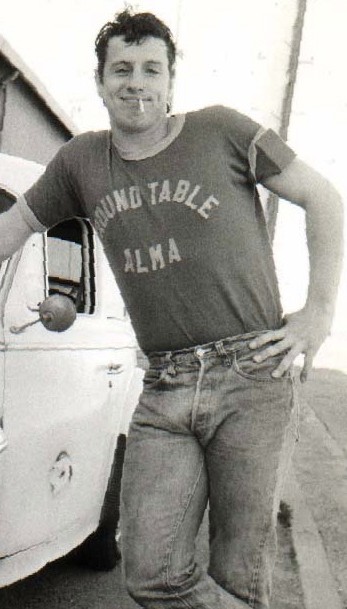
“David Henry Sterry recounts his shocking, sad and sordid experiences as a 17-year old "chicken" (teenage prostitute) servicing the lonely matrons of 1970′s Hollywood with a standup comic’s sensibility, tone and timing. The overall effect is jarringly surreal, like an X-rated Boogie Nights narrated by a teenage Alice in Wonderland. Sterry’s anecdotes, ranging from the mildly titillating to the profoundly disturbing, expose Hollywood at its seamiest, a desperate city of smut and glitz. I read the book from cover to cover in one night, unable to put it down, finally arriving at the black and white photo of the softly smiling former chicken turned memoirist. Could all of this have really happened to him? If so, he deserves praise just for surviving to tell his story.”

– Eliza Thomas, Places, the magazine for the Modern Nomad


Leeds Guide

           
“Snappy and acutely observational writing… It’s a book filled with wit, some moments of slapstick, and of some severe poignancy… a flair for descriptive language, and a fine knack with expertly told little escapades… The human ability to be kind ultimately reveals itself, in a book which is dark, yet always upbeat and irreverent. A really good, and enlightening, read.”

— Ian Beetlestone, Leeds Guide


The Talk of the Town KTKT

ktkt-100.jpg

“A 1-night read… should be mandatory reading for parents and kids…”

– Bert Lee, The Talk of the Town KTKT, Tucson


Details Magazine

 details.gif 

“Priceless material…”

– Details Magazine


BBC 1

bbc

“Humorous and charming… Outrageous and entertaining…”

– Michael Williams, BBC 1


San Francisco Bay Times

“[A] tour-de force”

– San Francisco Bay Times


BBC Radio

BBC Radio

A beautiful book… a real work of literature… wonderfully written.”

– Vanessa Feltz, BBC Radio